Hit by a Forklift
in an Elk Grove Warehouse?
Injury Law Made Personal®
If a forklift struck you in a distribution center, workers’ compensation is only part of what you may be owed. A third party — another contractor, a staffing agency, the property owner, or the equipment maker — may also be liable. Ankin Law has fought for injured Illinois workers for over 40 years.
Call 312.600.0000 Free Case ReviewHow a Forklift Accident Creates Liability
The Situation
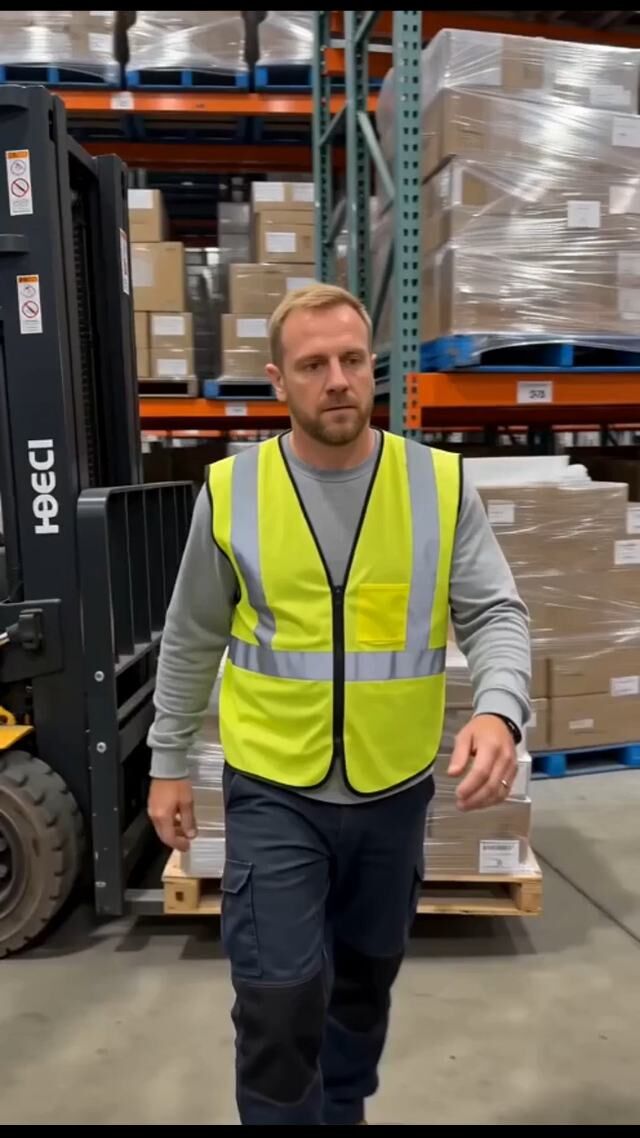
Distribution centers are required to keep foot traffic separated from powered equipment. When a warehouse runs loaded forklifts through narrow aisles with blind corners, no spotter, and no marked walkway, it creates the exact conditions that put a worker on foot in the path of a moving machine. That is not bad luck — it is a failure of basic warehouse safety.
The Accident
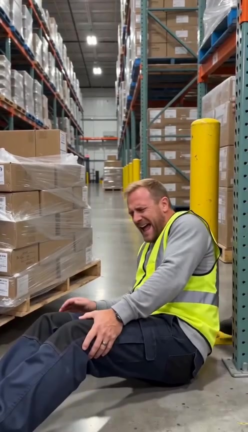
A loaded forklift backs or turns into an aisle without clearance or visibility and clips a worker on the leg, hip, or lower back. In Illinois, workers’ compensation covers your medical care and lost time regardless of fault — but it is capped, and it does not pay for pain and suffering. A separate third-party claim often can.
The Solution
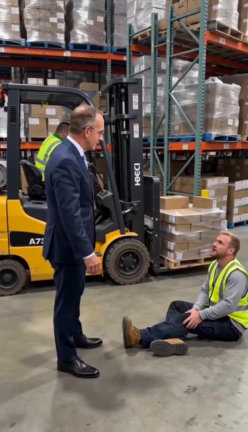
Howard Ankin has fought for injured Illinois workers for over 40 years. His firm pursues the comp claim and investigates the full picture — who employed the operator, who ran the warehouse, who owned the building, and who maintained the lift. Every liable party gets pursued. No fees unless we win.
Is a Free Consultation Really Free?
Howard Ankin answers your questions directly.
What the Numbers Say About Forklift Injuries
serious injuries are caused by forklifts in U.S. workplaces each year, according to OSHA — most involve a worker on foot, not the operator
is all the time Illinois law gives you to notify your employer of a workplace injury — miss it and your comp claim can be denied outright
Illinois deadline to file a workers’ compensation claim — but a third-party injury claim can expire in as little as 2 years
Who Is Responsible — and What You Can Recover
Workers’ Compensation
If you were on the clock when the forklift hit you, Illinois workers’ compensation covers your medical treatment, a portion of your lost wages, and permanent disability — and you do not have to prove anyone was at fault. You cannot be fired for filing. What comp does not cover is pain and suffering, which is why the second claim matters.
Third‑Party Liability
Warehouses run on layered contractors. If the forklift operator worked for a different company, or a staffing agency placed him, or the building owner controlled the aisle layout, or the lift itself was defective or badly maintained, that party is outside the comp system — and can be sued directly for full damages.
What You Can Recover
A successful case can cover medical bills past and future, lost wages, permanent disability, vocational retraining, and — through a third-party claim — pain and suffering and loss of normal life. The key is identifying every liable party and locking down the evidence before it disappears.
Why Ankin Law Is the Right Call After a Forklift Injury
Comp and Third‑Party, Together
Most firms handle one or the other. Ankin Law runs the workers’ compensation claim and the third-party injury case side by side, so the two do not undercut each other — and so the comp lien gets negotiated instead of eating your recovery.
Evidence Disappears Fast
Dock camera footage gets overwritten in days. Forklift telematics and seat-belt data get wiped. Training files, inspection logs, and incident reports get quietly corrected. Ankin Law moves immediately to preserve what proves the warehouse knew.
No Fee Unless You Win
You pay nothing to start and nothing unless Ankin Law recovers for you. You get the same aggressive representation whether you can afford it today or not. Howard Ankin has been doing this for over 40 years.
Get Your Free Case Review
There are strict deadlines on Illinois workplace injury claims — and the notice window is short. Contact us today for a free, confidential consultation with no obligation.
📞